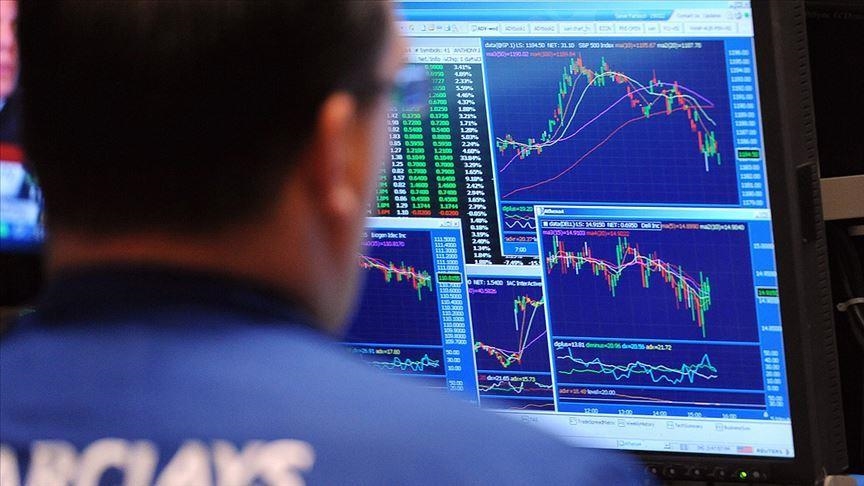
Global Markets Cautious: US Futures Eye Jackson Hole for Fed Path
As global financial markets brace for a pivotal period, a palpable sense of caution has settled over trading floors. Investors worldwide are meticulously dissecting every economic indicator and central bank utterance, with particular attention paid to the movements of US futures before the bell. These early indicators often paint a vivid picture of market sentiment, acting as a crucial barometer for the trading day ahead. Currently, the landscape is one of tentative optimism battling persistent unease, largely driven by shifting expectations surrounding the Federal Reserve's monetary policy trajectory.
The past few trading sessions have seen US futures waver, reflecting a market grappling with contradictory signals. While some corners of the market search for bargains, others are retreating to defensive positions, fearful of what lies ahead. This cautious stance is not unfounded; recent comments from Federal Reserve Chair Jerome Powell, coupled with burgeoning inflation concerns, have significantly reshaped investor outlooks. All eyes are now turning to the highly anticipated Jackson Hole Economic Symposium, an event historically known for delivering market-moving announcements, as participants eagerly await further clues regarding the Fed's path forward.
The Fed's Shadow: Powell's Comments and Tapering Anticipation
The recent dip in US stocks and the subsequent pressure on futures before the bell can be directly traced back to a critical moment: Federal Reserve Chair Jerome Powell's sobering remarks at a town hall. His comments acted as an "icy splash of water" for many investors who had perhaps clung to the hope of a swift, V-shaped economic recovery post-pandemic. Powell unequivocally stated that "we are not simply going back to the economy that we had before the pandemic" and that the coronavirus would be with us "for a while." This candid assessment shattered the illusion of an easy return to normalcy, prompting a significant reassessment of market expectations.
The implication of Powell's words is profound. It signals that the economic landscape has fundamentally shifted, and traditional recovery models may no longer apply. This realization has contributed to the fading hopes for a rapid rebound, pushing investors to re-evaluate their portfolios. Economically sensitive value stocks, which typically thrive during periods of strong growth and recovery, have underperformed, while defensive sectors have seen relative strength. This divergence highlights a market hedging against uncertainty and a prolonged period of economic adjustment.
Adding to the apprehension is the ongoing discussion around the Fed's bond-buying program and the potential for tapering. Investors are keenly watching for any indication that the central bank might begin to scale back its accommodative monetary policies sooner rather than later. The upcoming Jackson Hole conference, scheduled from August 26-28, is widely perceived as the next major catalyst for such signals. This annual symposium has historically served as a platform for significant policy announcements, making it a must-watch event for anyone invested in the global markets. For more on the initial market reaction to Powell's statements and tapering fears, you can read our detailed analysis: US Futures Waver Before Bell: Powell's Comments & Fed Tapering Fears.
Navigating Volatility: A Global Market Snapshot
The cautious sentiment emanating from the US is reverberating across global exchanges, creating a complex tapestry of market performance. European stocks, for instance, have experienced whipsaw trading. Initially, they saw a slight uptick, fueled by dip-buying in reflationary travel and leisure sectors and positive UK data, which showed a 2% year-over-year increase in a key economic indicator, albeit a slowdown from the previous month. However, these gains quickly evaporated as the dollar strengthened, putting pressure on other currencies and risk assets.
The British Pound (GBP) provides a clear example of this volatility. While it initially rose following the UK's CPI data release, its rally was short-lived. The GBP/USD pair subsequently slipped below its 200-day moving average (DMA), pushed down by the 50-DMA, which is now heading towards a "Death Cross" formation. This technical pattern, where the 50-DMA crosses below the 200-DMA, is often interpreted as a bearish signal, suggesting a potential top for the currency. This technical weakness, combined with broader market caution, underscores the fragility of current market movements.
In contrast, Asian equities have enjoyed something of a rebound, despite the slide in US shares and disappointing US economic data that has cemented arguments for disrupted growth. China's markets, in particular, have shown remarkable resilience, outperforming others with a significant jump, even amidst the country's extensive tech regulatory clampdown. This peculiar immunity to setbacks, even when other markets react negatively to Chinese risks, is a recurring theme and one that continues to intrigue market analysts. It suggests unique internal drivers and investor confidence that often defy external pressures.
Across the board, the overarching theme is one of caution. Risk assets are trading in a holding pattern, as investors weigh the implications of potential stimulus removal by the Fed. This global interconnectedness means that even seemingly isolated developments can ripple through markets, necessitating a holistic view for investors. For an earlier look at the pre-market jitters and fading recovery hopes, see: Pre-Market Jitters: US Futures Drop as V-Shaped Recovery Hopes Fade.
Decoding Pre-Market Moves: Why Futures Matter
The behavior of US futures before the bell offers invaluable insights into the prevailing market sentiment and can often foreshadow the day's trading trends. When all four major US contracts—Dow, S&P 500, Nasdaq 100, and Russell 2000—are in the red during the European session, it's a clear signal of underlying pressure, often paring any gains achieved during the positive Asian session. Notably, Dow futures have been among the hardest hit, while Russell 2000 futures have extended a multi-day selloff of their underlying gauge.
The Russell 2000's underperformance is particularly telling. Representing smaller, domestically focused firms, the Russell 2000 is highly sensitive to borrowing costs and domestic economic conditions. As expectations for aggressive monetary tightening rise, these smaller companies are often the first to feel the pinch, impacting their growth prospects and business operations. This makes the Russell 2000 an important bellwether for the broader health of the US economy, especially concerning interest rate sensitivity.
However, an intriguing anomaly has emerged: the Nasdaq 100, despite being highly susceptible to rising rates due to its composition of growth-oriented tech stocks, has shown unexpected resilience, even outperforming the S&P 500 in pre-market trading. This phenomenon, observed for a second straight day, suggests a potential shift in market dynamics. It could indicate that bulls are finding bargains in the tech sector after significant declines, or perhaps it reflects a rotation where investors are beginning to differentiate between specific tech companies, favoring those with strong fundamentals or innovative leadership. While it's premature to declare a paradigm shift without seeing a definitive bottom, this divergence warrants close monitoring. It highlights that even within a broadly cautious market, specific sectors can exhibit unique behaviors, driven by underlying narratives or perceived value.
Practical Tip: Interpreting Futures Movements For savvy investors, monitoring futures before the bell isn't just about knowing if the market will open up or down. It's about:
- Magnitude: How significant are the moves? Large swings suggest strong conviction.
- Relative Performance: Which indices are stronger or weaker? This can indicate sector rotation or specific areas of concern/opportunity.
- Catalysts: What news or economic data is driving the futures? Understanding the 'why' is crucial.
- Divergence: When different futures contracts move in opposite directions, it signals internal market disagreement, which can lead to choppy trading.
Strategies for Uncertain Times: Investor Insights
In a period characterized by caution and a growing sense of foreboding over potential stimulus withdrawal, investors must adopt robust strategies to navigate the choppy waters ahead. The current environment demands vigilance, adaptability, and a diversified approach to portfolio management.
- Diversification is Key: While defensive sectors have shown strength, a balanced portfolio that includes exposure to both growth and value, across various geographies, can help cushion against unexpected shocks. Consider sectors less sensitive to interest rate hikes, such as utilities, consumer staples, and healthcare, but don't abandon growth opportunities entirely, especially if tech stocks are truly finding a bottom.
- Stay Informed and Agile: The Fed's communications, upcoming economic data (especially inflation reports), and geopolitical developments will continue to shape market sentiment. Being aware of these events and their potential impact allows for timely adjustments to investment strategies. The Jackson Hole symposium is a prime example of an event requiring close attention.
- Risk Management is Paramount: In volatile markets, prudent risk management practices are non-negotiable. This includes setting appropriate position sizes, utilizing stop-loss orders to limit potential downsides, and avoiding over-leveraging. Understand your personal risk tolerance and align your investments accordingly.
- Re-evaluate Long-Term Holdings: Use periods of market uncertainty to re-evaluate the fundamentals of your long-term holdings. Are the companies you own still well-positioned to thrive in an environment of potentially higher interest rates and slower growth? Quality businesses with strong balance sheets and consistent cash flow tend to perform better during economic headwinds.
- Consider Alternative Assets: The context mentioned rallies in yields and gold. While not suitable for every investor, assets like gold can serve as a hedge against inflation and market instability. Higher yields might also make bonds more attractive to conservative investors, though their sensitivity to further rate hikes needs consideration.
Conclusion
The global financial markets are currently locked in a delicate balance, with US futures before the bell serving as an early warning system for the underlying anxieties. Federal Reserve Chair Jerome Powell's candid remarks have reshaped expectations, pushing hopes for a swift economic recovery further out and cementing concerns about potential tapering. With the highly anticipated Jackson Hole symposium on the horizon, investors are bracing for further clarity on the Fed's monetary policy path. Navigating this period of heightened caution requires a well-informed, adaptable, and disciplined approach. By focusing on diversification, rigorous risk management, and staying abreast of critical economic and central bank communications, investors can position themselves to weather the current volatility and potentially capitalize on emerging opportunities.